Fire damage assessment requires immediate attention to distinguish between surface-level cosmetic issues and serious structural compromise. Cosmetic damage affects only visible surfaces like paint, drywall facing, or fixtures, while structural damage impacts load-bearing components that keep your home safe and stable. Identifying fire damage structural repair needs early prevents catastrophic failures and ensures your family’s safety. The difference often determines whether you need simple cleaning and repainting or extensive reconstruction involving beams, framing, and foundations.
Understanding these distinctions protects both your investment and your loved ones. Many homeowners underestimate hidden damage because the visible effects seem manageable, but fire affects materials in ways that aren’t always immediately apparent.
Why Fire Damage Assessment Cannot Wait
Fire creates damage through three mechanisms: direct flame contact, extreme heat exposure, and corrosive smoke residue. Each affects building materials differently. Wood members can lose up to 80% of their structural capacity even when they appear intact on the surface. Steel beams expand during fires and contract afterward, creating microfractures that compromise strength. Concrete experiences spalling when moisture inside superheats and explodes outward.
Time accelerates deterioration. Acidic smoke residue continues eating into materials for weeks after flames are extinguished. Metal fasteners corrode rapidly. Wood absorbs moisture from firefighting efforts, leading to rot and mold. What starts as repairable damage can become a complete gut-out project if left unaddressed.
Surface Damage Versus Structural Compromise
Cosmetic fire damage includes soot-stained walls, smoke-damaged paint, scorched cabinet faces, melted fixtures, and discolored tile or countertops. These issues affect appearance and require thorough cleaning, sealing, and replacement of finish materials. The underlying structure remains sound.
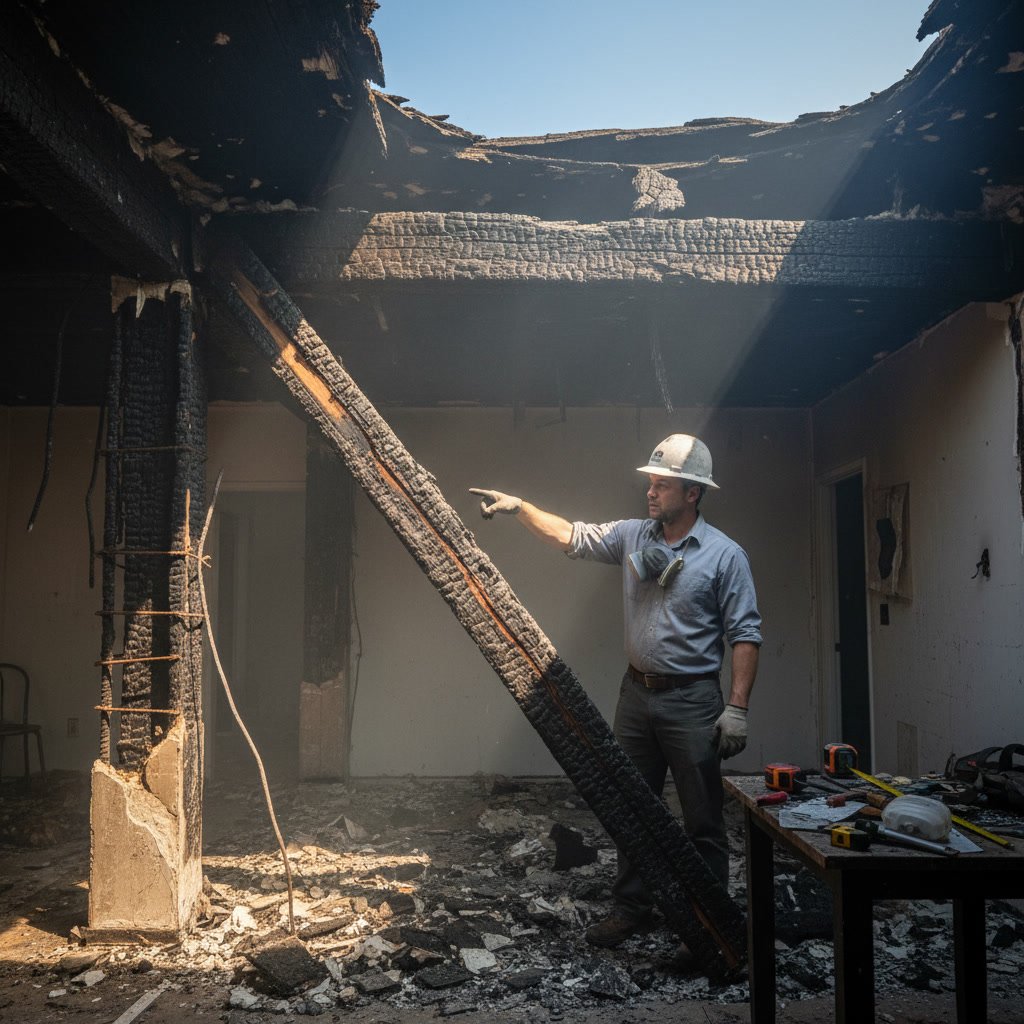
Structural damage involves compromised framing members, weakened roof trusses, damaged foundations, buckled floor joists, cracked load-bearing walls, and deteriorated connection points between structural elements. These problems threaten the building’s integrity and require engineering assessment and reconstruction.
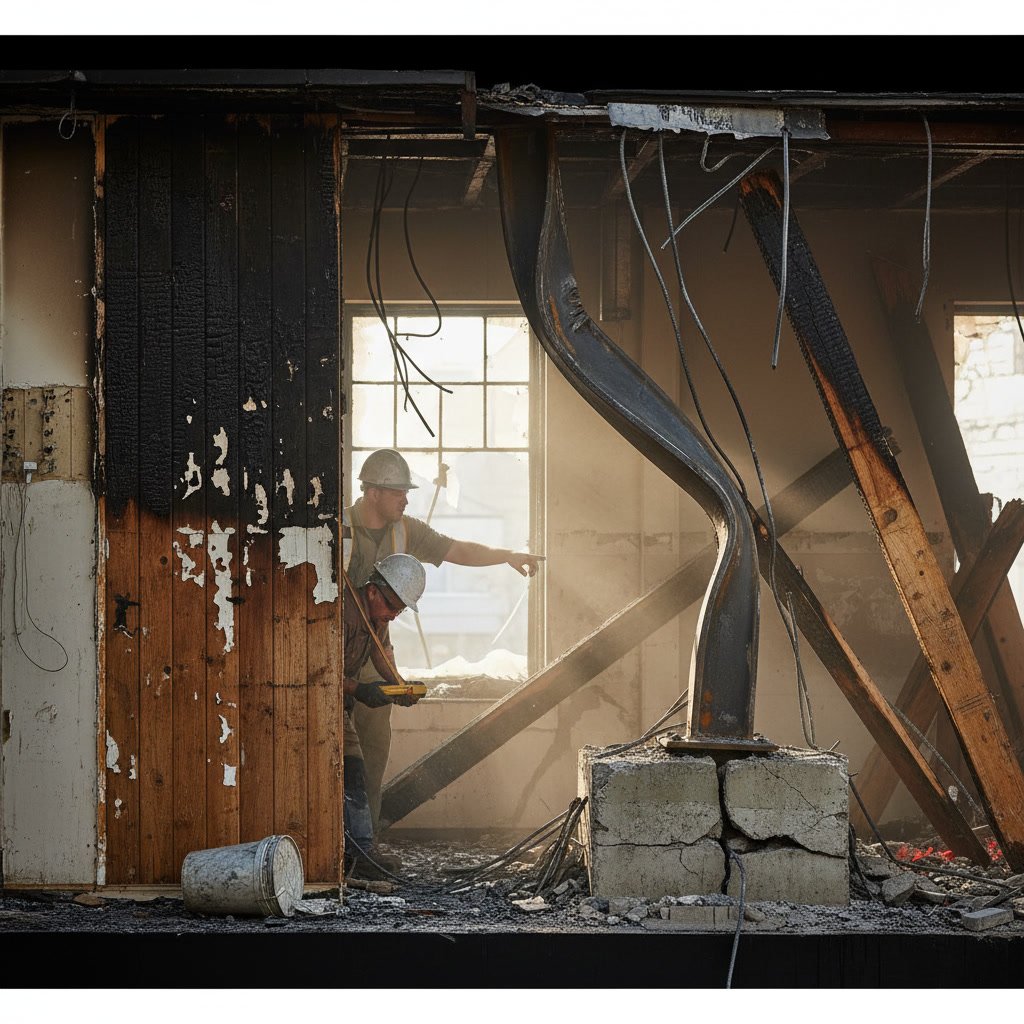
Visual Indicators of Structural Fire Damage in Palm Desert Homes
Sagging ceilings or rooflines indicate compromised roof trusses or ceiling joists. Even a subtle dip suggests serious structural weakness. Cracks wider than one-eighth inch in walls, especially near corners or openings, signal foundation or framing damage. Doors and windows that suddenly stick or won’t close properly indicate shifted framing.
Charred wood deeper than one-quarter inch on beams, studs, or joists means the member has lost significant strength. Surface charring less than one-eighth inch may be cosmetic, but anything deeper requires professional evaluation. Exposed rebar in concrete or visible deflection in steel beams always demands immediate attention.
Floor bounce or sponginess when walking indicates damaged floor joists or subfloor. In desert climates like Palm Desert, concrete slab foundations can develop stress fractures from extreme heat, visible as spiderweb patterns or linear cracks.
Hidden Damage That Professional Inspection Reveals
Many critical issues hide behind intact drywall or under flooring. Thermal imaging cameras detect heat patterns that reveal damaged insulation, compromised electrical wiring, and structural voids. Moisture meters identify water-saturated framing from firefighting efforts, which leads to rot and requires replacement even if fire never touched those areas.
Behind-wall framing damage often goes unnoticed until walls are opened. Fire travels through wall cavities, damaging studs and electrical systems without visible exterior signs. Connection hardware like joist hangers, hurricane ties, and truss plates can fail from heat exposure while surrounding wood appears fine.
Foundation damage may not manifest immediately. Heat-stressed concrete develops delayed fracturing as internal moisture expands and contracts through temperature cycles common in the Coachella Valley.
The Five-Step Professional Damage Assessment Process
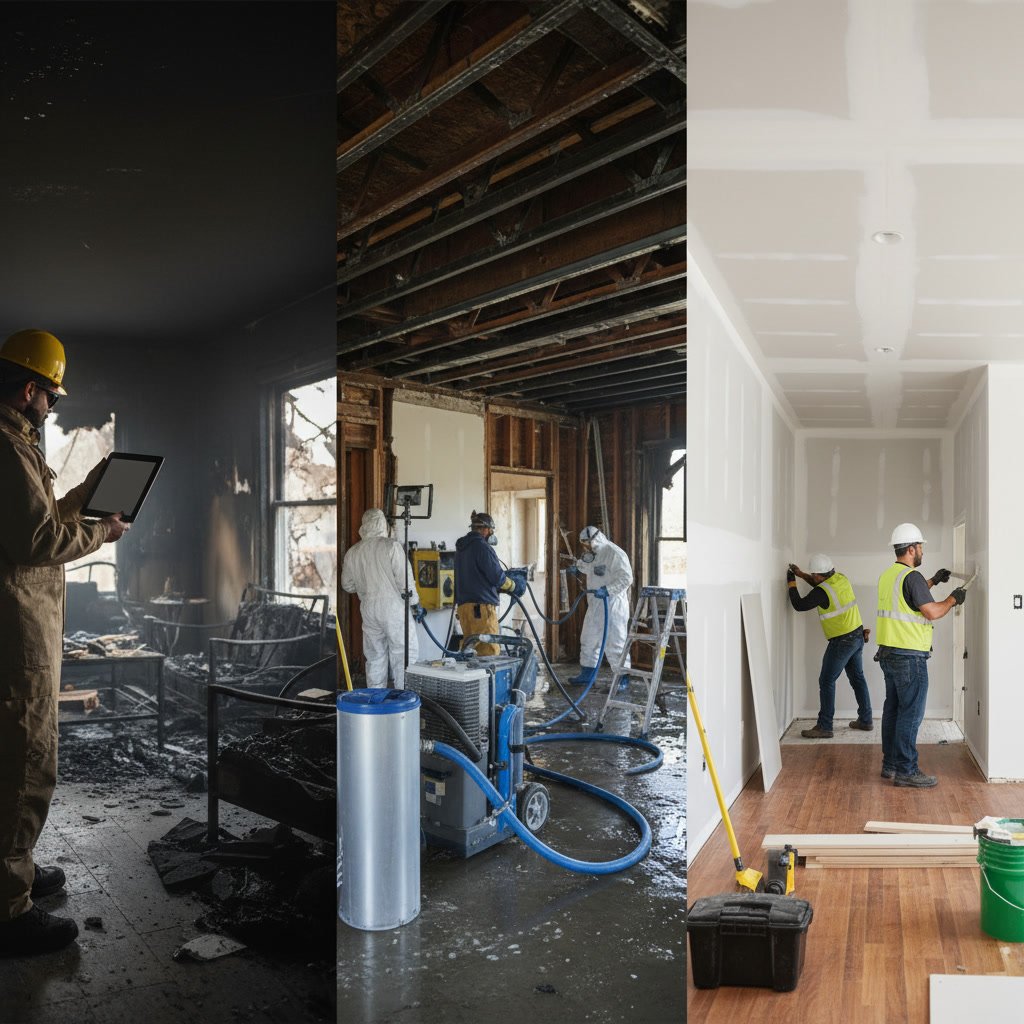
First, professionals establish safety by checking for immediate collapse risks, gas leaks, electrical hazards, and toxic materials. This includes testing air quality for carbon monoxide and other combustion byproducts.
Second, they document all visible damage with photographs, measurements, and detailed notes for insurance and planning purposes. This creates a baseline for restoration scope.
Third, structural engineers perform load-bearing analysis on questionable members. They calculate remaining capacity using char depth measurements, deflection tests, and material sampling. This determines what can be repaired versus what requires replacement.
Fourth, invasive investigation opens walls, ceilings, and floors at strategic locations to examine hidden systems and framing. This reveals the full extent of damage that surface inspection cannot detect.
Fifth, specialists develop a prioritized restoration plan separating emergency structural repairs from cosmetic restoration work. This ensures safety work happens first while allowing accurate budgeting for the complete project.
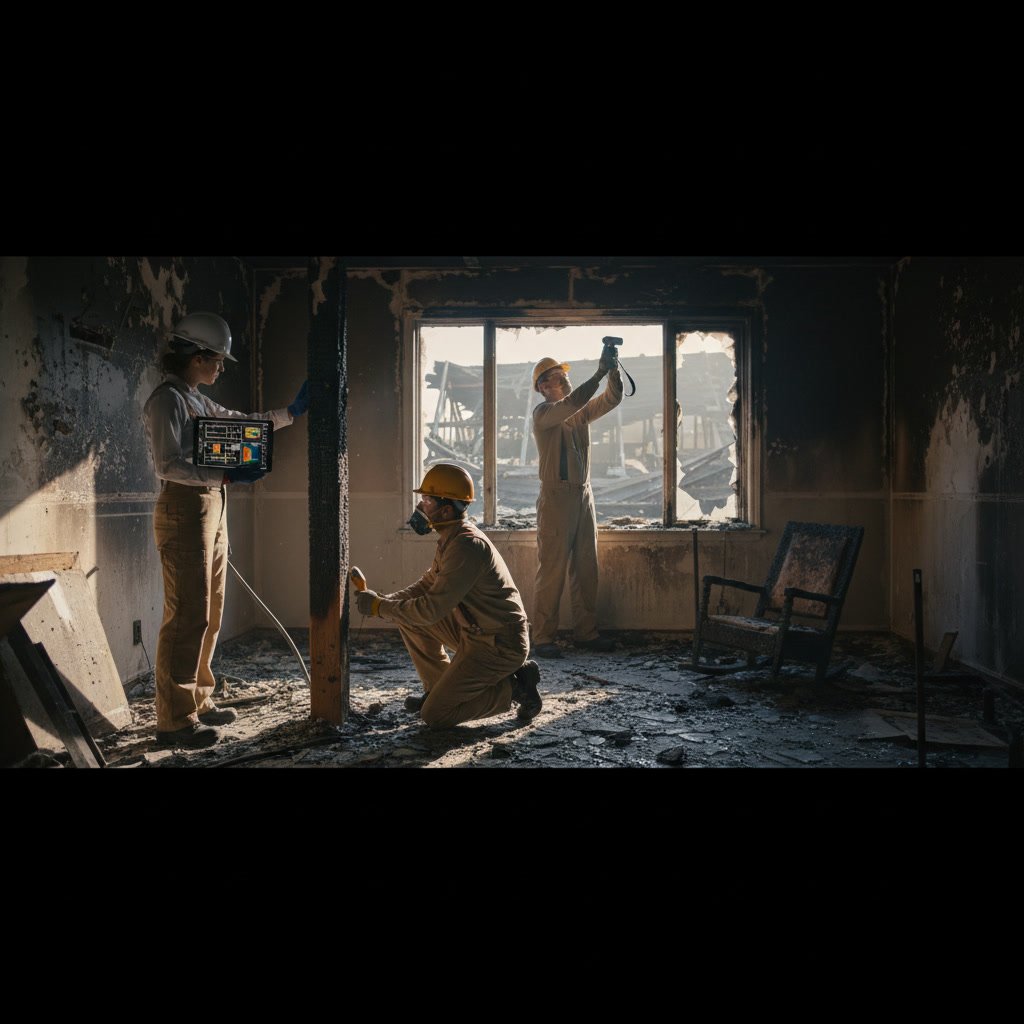
When Smoke and Soot Indicate Deeper Problems
Heavy soot accumulation on structural members suggests prolonged heat exposure that may have weakened them. Oily, sticky residue from synthetic materials indicates temperatures exceeded 500 degrees, hot enough to damage most building materials.
Discoloration patterns tell the fire’s story. Yellow or brown staining on wood suggests moderate heat exposure requiring testing. Black charring obviously indicates direct flame contact. White or gray ash means complete combustion occurred, and those members must be replaced.
Smoke damage in attic spaces often reveals compromised roof sheathing and trusses even when ceiling damage below appears minor. The same applies to crawl spaces where floor systems may be damaged while flooring above looks intact.
Material-Specific Failure Modes After Fire Exposure
Wood framing loses strength proportionally to char depth. The industry standard considers wood with char exceeding one-quarter inch of the member’s dimension as structurally compromised. A six-inch beam with half-inch char loses significant capacity. Heat also damages wood beyond the char layer by breaking down lignin bonds.
Engineered lumber products like I-joists and laminated beams fail catastrophically when glue lines separate from heat. These cannot be repaired and must be fully replaced even with minimal visible damage.
Steel expands at high temperatures, pushing connections apart. Upon cooling, it contracts but rarely returns to original dimensions. This creates permanent stress and weakening. Steel exposed to temperatures above 1,000 degrees loses half its strength.
Concrete undergoes spalling when aggregate expands differently than cement matrix. Color changes indicate temperature exposure: pink suggests 600 degrees, gray indicates 900 degrees, and buff coloring means temperatures exceeded 1,200 degrees. Each level corresponds to specific strength loss percentages.
The Cost Difference Between Cosmetic and Structural Repair
Cosmetic restoration focuses on cleaning, sealing, painting, and replacing finish materials. Typical costs include drywall replacement, cabinet refacing or replacement, new flooring, fixture installation, and thorough cleaning. These projects might involve specialists for kitchen remodels or bathroom remodels if those areas sustained damage.
Structural repair requires engineering, permits, temporary support systems during reconstruction, replacement of framing members, foundation repair, electrical and plumbing rerouting, and complete rebuilding of affected areas. Similar challenges arise when dealing with water damage, which often accompanies fire incidents due to firefighting efforts.
The cost multiplier for structural work compared to cosmetic work typically ranges from three to eight times higher, depending on damage extent. However, attempting cosmetic repairs over unaddressed structural damage leads to far greater expense when failures occur.
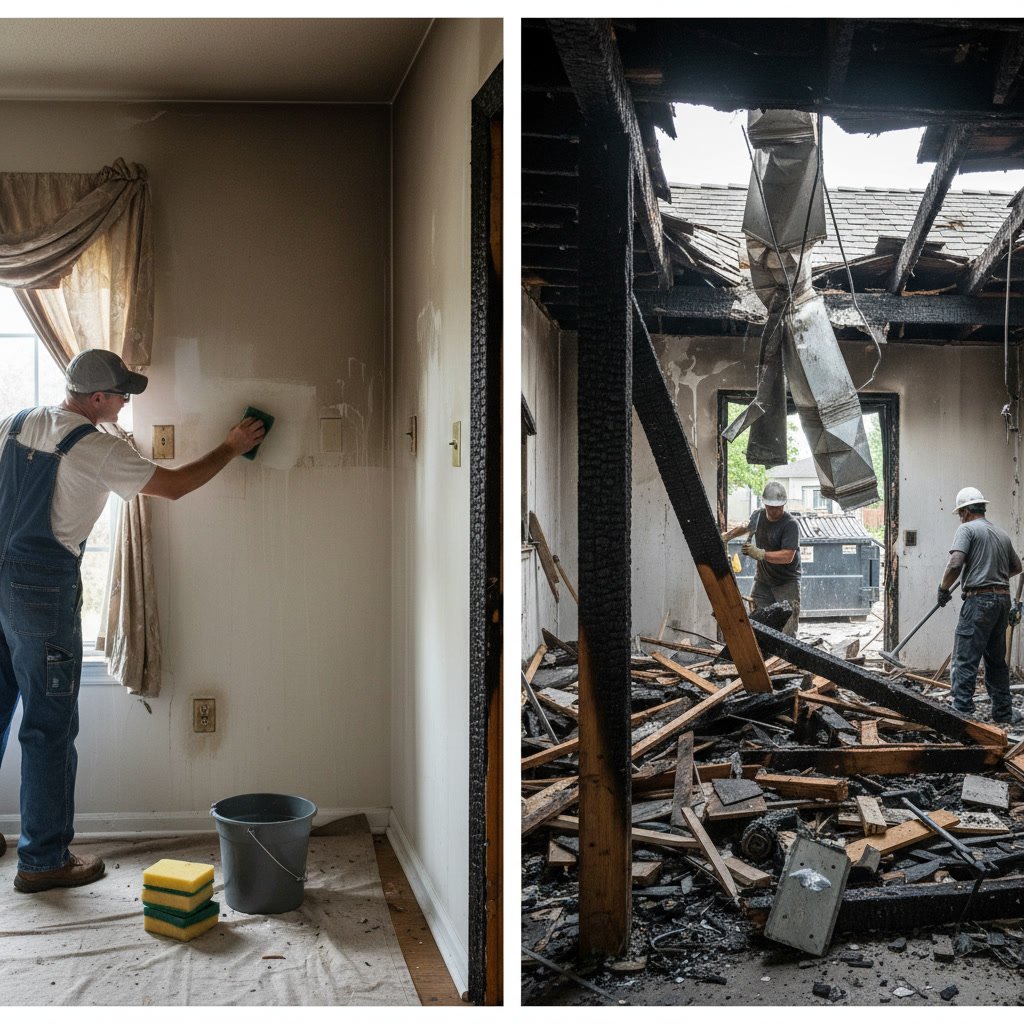
Desert Climate Considerations for Fire Damaged Structures
The Coachella Valley’s extreme temperature swings accelerate deterioration in fire-damaged materials. Daily temperature variations of 40 degrees or more cause expansion and contraction that worsens cracks and separations. This makes prompt assessment even more critical than in moderate climates.
Low humidity helps by reducing mold growth in water-damaged framing, but it also causes rapid moisture loss that can lead to warping and splitting in compromised wood members. Heat-damaged materials become more brittle in dry conditions.
Monsoon season introduces sudden humidity spikes that can trigger rapid mold growth in porous fire-damaged materials. The combination of smoke residue and moisture creates ideal conditions for biological growth that further weakens structural components.
Working with Insurance After Fire Damage
Insurance adjusters assess damage to determine coverage, but their initial evaluation may miss hidden structural issues. Property owners benefit from independent professional assessments that identify all damage before agreeing to settlement amounts.
Documentation quality directly impacts claim success. Detailed photographs, professional inspection reports, and clear damage descriptions support claims for necessary structural repairs. Insurance companies sometimes initially approve only cosmetic work, requiring additional documentation to cover structural needs.
The difference between actual cash value and replacement cost coverage significantly affects restoration budgets. Understanding policy terms before beginning work prevents unexpected out-of-pocket expenses. Many policies require using licensed contractors for structural work, making proper contractor selection critical for both quality and coverage compliance.
Protecting Your Home and Family Through Proper Assessment
The distinction between cosmetic and structural fire damage determines both safety and financial outcomes. Surface damage misleads homeowners into underestimating problems, while hidden structural compromise poses genuine danger. Professional assessment by experienced contractors with proper licensing and long-term industry knowledge ensures accurate diagnosis and appropriate restoration.
Every fire-damaged home deserves thorough evaluation before restoration begins. The initial investment in professional inspection prevents both safety risks and the far greater expense of addressing overlooked damage later. Desert conditions in the Coachella Valley make timely action especially important as environmental factors accelerate deterioration.
Kellner construction LLC brings over four decades of construction and fire restoration expertise to homes throughout the region. If your property has experienced fire damage, a comprehensive professional assessment protects your investment and ensures your family’s safety. Contact our team at +17607745333 to schedule an evaluation and receive a detailed restoration plan tailored to your home’s specific needs.